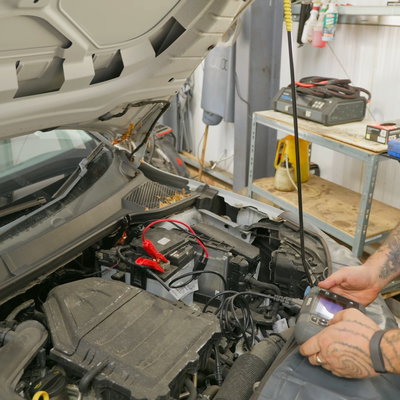
In the world of car care and maintenance, the P0108 VAG fault code has emerged as an important topic for mechanics, enthusiasts, and everyday drivers alike. This code indicates a problem with the manifold absolute pressure (MAP) sensor, a key component in assessing atmospheric pressure, which impacts various engine functions. This guide aims to break down the P0108 fault code, detailing its causes, symptoms, diagnostics, and available solutions to ensure your vehicle runs at its best.
Understanding the Basics of the P0108 Fault Code
To fully comprehend the implications of the P0108 VAG fault code, it is vital to understand its components. This code is set off when the Engine Control Unit (ECU) detects a voltage from the MAP sensor that is outside the expected range. Importantly, the P0108 code can also relate to the BARO (Barometric Pressure) sensor, as some vehicles utilise a combined MAP/BARO sensor.
The Role of the MAP Sensor in Engine Management
The MAP sensor plays a crucial role within the engine management system by tracking manifold pressure, which helps determine the engine’s air intake and overall power output. By measuring atmospheric pressure, the MAP sensor enables the ECU to adjust fuel delivery and ignition timing effectively. Faulty readings from the MAP sensor can lead to incorrect fuel-air mixtures, negatively impacting both engine performance and emissions.
The MAP sensor interacts with several critical systems, including:
- Fuel injection systems: Ensuring optimal fuel delivery.
- Ignition systems: Timing the spark based on air intake.
- Emissions systems: Assisting in the reduction of pollutants.
Recognising the potential consequences of faults in the MAP sensor reinforces why any issues related to it must be addressed promptly.
Importance of Monitoring the MAP Sensor
Ignoring problems with the MAP sensor can cause performance issues and decrease engine efficiency. Regular diagnostics using OBD-II scanners can help identify potential problems early, especially those related to the MAP sensor. Understanding the P0108 VAG fault code is crucial in maintaining vehicle performance, reliability, and emissions compliance.
Common Symptoms Associated with P0108
When the P0108 fault code appears, several symptoms may arise in your vehicle’s operation. Identifying these can help facilitate timely diagnosis and repair.
Notable Symptoms
- Rough Idling: One of the most common signs is rough idling. Inaccurate MAP readings can prevent the ECU from accurately adjusting fuel injection, leading to unstable engine behaviour at idle.
- Poor Acceleration: Drivers may notice a struggle with smooth acceleration. The ECU may respond to faulty sensor data by providing sluggish or hesitant acceleration.
- Fluctuations in Engine Power: Sudden power fluctuations can indicate MAP sensor issues. Erratic readings can lead the ECU to misadjust the fuel mixture, impacting overall performance.
- Check Engine Light: The most noticeable indication is the illumination of the Check Engine Light (CEL), which serves as a prompt for intervention.
- Impact on Fuel Economy: A faulty MAP sensor can lead to decreased fuel efficiency. Incorrect air-fuel ratios result in inefficient combustion, causing increased fuel consumption.
- Potential Emission Issues: Inaccurate fuel-air ratios can elevate the vehicle’s emissions, risking failure in emissions tests.
Promptly recognising these symptoms can help avoid further complications and enhance vehicle reliability.
Diagnosing the P0108 Fault Code
Addressing the P0108 fault code effectively requires a structured diagnostic approach. Here are essential tools and steps for this process.
Required Tools for Diagnosis
- OBD-II Scanner: Critical for retrieving fault codes from the ECU and providing live data streams to monitor sensor performance.
- Multimeter: Used to measure voltage and continuity, which are crucial for checking wiring and sensor functionality.
- Vacuum Pressure Gauge: Helpful in diagnosing vacuum leaks that may affect MAP sensor readings.
Diagnostic Steps
- Connect the OBD-II Scanner: Start by connecting the scanner to the vehicle’s diagnostic port to retrieve fault codes. After identifying the P0108 code, record any additional codes that may aid in diagnosing related issues.
- Visual Inspection: Perform a thorough visual check of the MAP sensor and its wiring. Look for signs of wear, corrosion, or loose connections that could impact sensor performance.
- Check Sensor Output: Use the multimeter to verify the MAP sensor’s voltage output while the engine is running. Compare actual readings against manufacturer specifications. If values are outside expected ranges, consider sensor replacement.
- Testing Vehicle Vacuum System: Instead of using methods like spraying carburettor cleaner around the intake manifold (which can be dangerous), focus on more secure testing techniques to assess the vacuum system’s integrity.
- Data Stream Analysis: Use the OBD-II scanner to monitor real-time data for inconsistencies in the MAP sensor output compared to other engine parameters. This can highlight specific issues leading to the P0108 fault code.
Following a structured diagnostic approach is essential for identifying and resolving issues tied to the P0108 fault code effectively.
Causes of the P0108 Fault Code
Understanding what triggers the P0108 fault code is vital for effective solutions. Below are some common culprits.
Common Causes
- Faulty MAP Sensor: The most immediate cause is typically the MAP sensor itself. If it malfunctions, it may yield inaccurate readings and erroneous fault codes.
- Wiring Issues and Connections: Damaged or corroded wiring can disrupt the signal sent from the MAP sensor to the ECU. Even if the sensor works correctly, broken connections can trigger the P0108 code.
- Signal Shorted to Voltage: P0108 is an electrical fault where the MAP signal is stuck above its maximum. The most common cause is the signal wire shorting to the 5V reference or to battery voltage, which pins the reading high.
- Open Circuit or Failed Sensor: An open signal wire, a lost sensor earth or a MAP sensor that has failed internally can also leave the input floating high. Corroded or bridged connector pins have the same effect.
- General Engine Issues: Broader engine problems, such as issues with the throttle position sensor (TPS), may also trigger the P0108 fault code due to their influence on manifold pressure.
Being aware of these causes enables mechanics and vehicle owners to address the underlying issues effectively for optimal engine performance.
Solutions and Repairs for the P0108 Fault Code
Once diagnosed, it is essential to explore possible solutions for the P0108 fault code.
Recommended Solutions
- Sensor Replacement: If the MAP sensor is faulty, sourcing a high-quality replacement that meets or exceeds OEM specifications is vital.
- Inspect and Repair Wiring Issues: Check connections and wiring for signs of corrosion or damage. Repair or replace any compromised sections to ensure secure connectors.
- Vacuum Leak Repair: If vacuum leaks are detected, locate and seal them properly. This might involve replacing damaged hoses or ensuring seals are secure.
- Clear Air Intake System: Regularly maintain the air intake system. Clean or replace air filters as needed, and examine the intake tract for blockages that could affect MAP sensor performance.
- ECU Recalibration: In some cases, recalibrating the ECU may be required after repairs to ensure it correctly interprets signals from the MAP sensor.
- Regular Diagnostics: Establishing a routine vehicle diagnostics schedule helps catch issues early, promoting consistent monitoring of engine performance and sensor functionality.
Implementing these solutions not only addresses the immediate P0108 fault code but fosters long-term vehicle reliability and performance.

Conclusion
In summary, understanding the P0108 VAG fault code is essential for mechanics and car owners. It primarily relates to the MAP sensor and can significantly impact performance if not addressed promptly. By recognising symptoms, employing a structured diagnostic approach, and applying appropriate solutions, car owners can optimise engine performance and reliability.
Proactive monitoring and timely intervention can prevent minor issues from escalating into larger problems, highlighting the importance of automotive diagnostics knowledge. Remember, knowledge is power, be prepared and keep your engine running smoothly.
Frequently Asked Questions about P0108
What does P0108 mean?
P0108 is set when the Manifold Absolute Pressure (MAP) sensor signal stays above the maximum value the engine control unit will accept, typically over about 4.5V. The ECU treats it as a hard circuit-high fault and, on most VAG engines, will drop the car into limp mode straight away. It is the mirror of P0107 (signal stuck low) and almost always points at the sensor or its wiring rather than at intake conditions.
What are the symptoms of P0108?
You will see the engine management light, usually with a rough or hunting idle, hesitation when accelerating and obvious power loss. Many VAG engines limit revs to about 3,000 rpm in limp mode. Fuel economy gets worse and on turbocharged petrol and TDI engines you will feel boost drop away. The fault is normally constant rather than intermittent because the underlying cause is electrical.
Is it safe to drive with a P0108 code?
A short, gentle trip to a garage is usually fine, but not motorway driving or towing. With the MAP signal pegged high the ECU defaults to safe fuelling that protects the engine but is not designed for sustained high-load driving. If the car is in limp mode and struggling to maintain speed, it is safer to have it recovered. Stedmans can run a full diagnostic at /car-diagnostics-in-worthing/.
What causes P0108?
The most common cause is an internally failed MAP sensor whose output is stuck at maximum. Next is a short between the MAP signal wire and either the 5V reference or battery voltage, often inside a damaged connector or where the loom rubs against the manifold. Pushed-back or corroded pins that bridge two terminals in the connector also produce P0108. Vacuum leaks and air filter blockages do not cause this code.
Can I clear P0108 myself?
Yes, any OBD-II scanner will clear the stored code, but the light usually comes back within seconds because P0108 is normally a hard fault. Clearing it also wipes the freeze-frame data a technician would use to confirm whether the signal was genuinely pegged high or just spiking. It is better to have the cause diagnosed first and the code cleared as part of the repair.
Will P0108 make my car fail the MOT?
The MOT does not scan for the code itself, but a permanently lit engine management light is an automatic MOT failure under DVSA warning-lamp rules. With the car in limp mode it would also be very unlikely to pass the metered emissions check on petrol, or the smoke opacity check on a TDI, because the fuelling is no longer being controlled normally. Fix the fault, clear the code, then present for MOT.
Which VAG models are most affected by P0108?
P0108 shows up most on 1.4, 1.8 and 2.0 TSI/TFSI EA113 and EA888 petrol engines across Golf Mk5/Mk6/Mk7, A3 8P/8V, A4 B7/B8, Passat B6/B7, Octavia and Leon, and on 1.6/2.0 TDI common-rail engines in similar platforms. The combined MAP/IAT sensor sitting in the intake manifold or charge pipe is the typical failure point, with heat and oil mist shortening its life. Our /makes/audi-specialist/ team see this often.
How is P0108 different from P0107?
They are direct opposites. P0107 means the MAP signal is stuck below the minimum the ECU will accept, usually a broken signal wire, an internally failed sensor, or a short to earth. P0108 means it is stuck above the maximum, usually a sensor failed high or the signal wire shorted to the 5V reference or battery voltage. A scan tool reading live MAP data will quickly show which way the signal has gone.