Introduction to Land Rover’s 4×4 Systems
A Legacy Built on All-Terrain Confidence
Land Rover has earned a reputation for conquering challenging landscapes. From rugged mountain trails to desert dunes, Land Rover vehicles handle rough conditions with ease. This fame is grounded in their ability to maintain traction and stability where many others struggle. Features such as advanced suspension systems allow for exceptional wheel articulation and comfort even off the beaten path.
The Value of Grasping Drivetrain and Differential Technology
For owners and enthusiasts, understanding how differentials and drivetrains work is essential. These components are at the heart of what makes a Land Rover excel off-road. Drivetrain technology ensures power is effectively delivered to each wheel, keeping the vehicle moving forward even when some tyres lose grip. Understanding these systems allows drivers to make the most of Land Rover’s built-in capabilities, especially crucial when navigating unpredictable terrains.
Tracing Land Rover’s 4×4 Innovation
The history of Land Rover’s 4×4 technology stretches back to the late 1940s. The first prototype emerged in 1947, inspired by WWII-era Jeep designs. When production began in 1948, Land Rover models quickly distinguished themselves with permanent four-wheel drive, reliable power delivery, and tough construction. Key milestones, such as the introduction of the Range Rover in 1970, with its permanent 4WD, set new standards for off-road ability paired with comfort and refinement.
A strong focus on engineering and continual improvement has kept Land Rover at the forefront of all-terrain performance. These foundations underpin every model today, forming the basis for more advanced drivetrain technology.
Understanding Differentials: The Basics

What Is a Differential
A differential is a central part of a vehicle’s drivetrain. Its main function is to allow the drive wheels to spin at different speeds while still receiving power from the engine. This is important when a car turns or travels over uneven ground because the wheels on each side of the vehicle follow slightly different paths and must rotate at different rates. The typical differential consists of a set of gears arranged to handle this task efficiently.
How Power Is Transmitted
The engine produces power, which is sent to the wheels via the transmission and then the differential. In Land Rovers and other 4×4 vehicles, differentials are usually found on both the front and rear axles. These differentials split the engine’s torque, sending equal force to each wheel while letting them rotate independently. This design allows for a smooth power transfer, especially in bends or when grip differs between wheels.
Importance for Traction and Stability
Differentials play a crucial role in maintaining traction and stability on all surfaces. By permitting each wheel to move at a suitable speed, they help prevent skidding and minimise tyre wear. Without a functioning differential, turning corners becomes difficult and the tyres can scrub against the road, leading to rapid wear and loss of control. This is especially important for off-road vehicles, where uneven surfaces place unique demands on each wheel.
With the basics of differentials understood, it becomes easier to compare different 4×4 systems used today.
Types of 4×4 Systems in Modern Vehicles
Comparing Modern 4×4 and AWD Systems
Modern vehicles offer several four-wheel drive (4WD) and all-wheel drive (AWD) configurations. They can be categorised into full-time AWD, part-time AWD, part-time 4WD, and full-time 4WD. Full-time AWD operates with all four wheels driven at all times, offering constant traction. Part-time AWD usually drives two wheels and automatically engages the other two when extra grip is needed, thanks to sensors and electronic controls. Part-time 4WD tends to be driver-activated; normally only two wheels are driven (typically the rear), and the driver selects 4WD manually when conditions demand it. Full-time 4WD, by contrast, powers all four wheels continuously and often allows for low-range gearing, crucial for serious off-road scenarios.
Land Rover’s Permanent All-Wheel Drive Approach
Land Rover differentiates itself by employing a permanent AWD system, also known as permanent 4WD. Unlike traditional part-time 4WD systems, Land Rover’s setup is always active, distributing torque to the front and rear axles as needed without driver intervention. This ensures rapid and reliable traction adjustment, especially useful on changing surfaces. It blends the convenience and feedback of AWD with the robustness of 4WD.
Advantages of Land Rover’s System
This permanent AWD approach offers several benefits. It provides smooth handling and improved safety in slippery or difficult conditions, as the system proactively shifts power where grip is greatest. The need for manual engagement is removed, keeping drivers focused and confident. Additionally, Land Rover’s system is designed for both on-road comfort and off-road strength, setting it apart from lighter-duty AWD typically seen in road-biased vehicles.
A detailed look at Land Rover’s actual differential arrangements will reveal how these drivetrain choices underpin capability and reliability.
Land Rover Differential Configuration

Classic Three-Differential Setups
Traditional Land Rover models are known for their robust three-differential configuration. These vehicles feature separate differentials for the front and rear axles, along with a centre differential that connects both axles. This arrangement allows for even power distribution, letting each axle and pair of wheels adjust independently as needed. The centre differential plays a key role during demanding off-road conditions by balancing torque between the front and rear, helping the vehicle maintain traction on slippery or uneven surfaces.
Modern Variations for Diverse Models
Recent Land Rover models, such as the Evoque, Freelander, and Discovery Sport, often adapt this classic setup to fit new designs and technologies. The Evoque and Freelander typically use a simplified system, sometimes relocating or removing the centre differential as their all-wheel-drive systems rely more on electronic controls. Meanwhile, vehicles like the Discovery Sport maintain excellent off-road capability by blending traditional mechanical solutions with advanced electronics.
Impact on Off-Road Performance
The chosen differential configuration directly enhances Land Rover’s off-road strengths. By allowing independent wheel rotation, classic setups provide excellent wheel articulation and help keep tyres firmly on the ground over rough terrain. Newer models compensate for simpler hardware by using traction control systems and various terrain modes, ensuring modern Land Rovers still achieve impressive traction and stability.
This foundation in drivetrain architecture supports other features, such as locking differentials, which further improve traction and control in challenging conditions.
Locking Differentials Explained
What Is a Locking Differential?
A locking differential is a mechanism that connects both wheels on an axle so they turn at the same speed, regardless of traction differences. When engaged, this feature provides equal power to both wheels, overcoming the limitations of standard differentials, which usually send power to the wheel with the least resistance. In Land Rover vehicles, the locking differential can be activated manually or electronically, ensuring drive goes to both wheels consistently and maximising traction in off-road settings.
Benefits for Off-Road Performance
Locking differentials are vital for tackling uneven and slippery terrain. By locking the drive across the differential, power is sent to both wheels even if one is off the ground or on a low-traction surface. This enables the vehicle to move forward instead of leaving one wheel spinning uselessly. Locking differentials notably improve control, climbing capability, and overall mobility in mud, sand, snow, or rocky conditions.
Comparing Differential Types
- Open Differentials: Allow wheels to rotate at different speeds. In low-traction situations, they direct power to the wheel with least resistance, often leaving the vehicle stuck.
- Limited-Slip Differentials (LSD): Use clutches to send more torque to the wheel with traction if the opposite wheel slips. They improve performance on mildly slippery surfaces but may not cope with extreme terrain.
- Locking Differentials: Mechanically force both wheels to turn together, delivering all torque to the wheel on the ground when the other has no grip. They are tougher and optimise traction for severe off-road use.
Locking differentials have some drawbacks, such as making cornering difficult and causing increased tyre wear if left engaged on hard surfaces. However, their off-road ability is unmatched.
As we continue exploring, understanding the components distributing power, such as the transfer case, remains vital for fully grasping Land Rover’s 4×4 engineering.
The Transfer Case and Its Role
Function in 4WD Systems
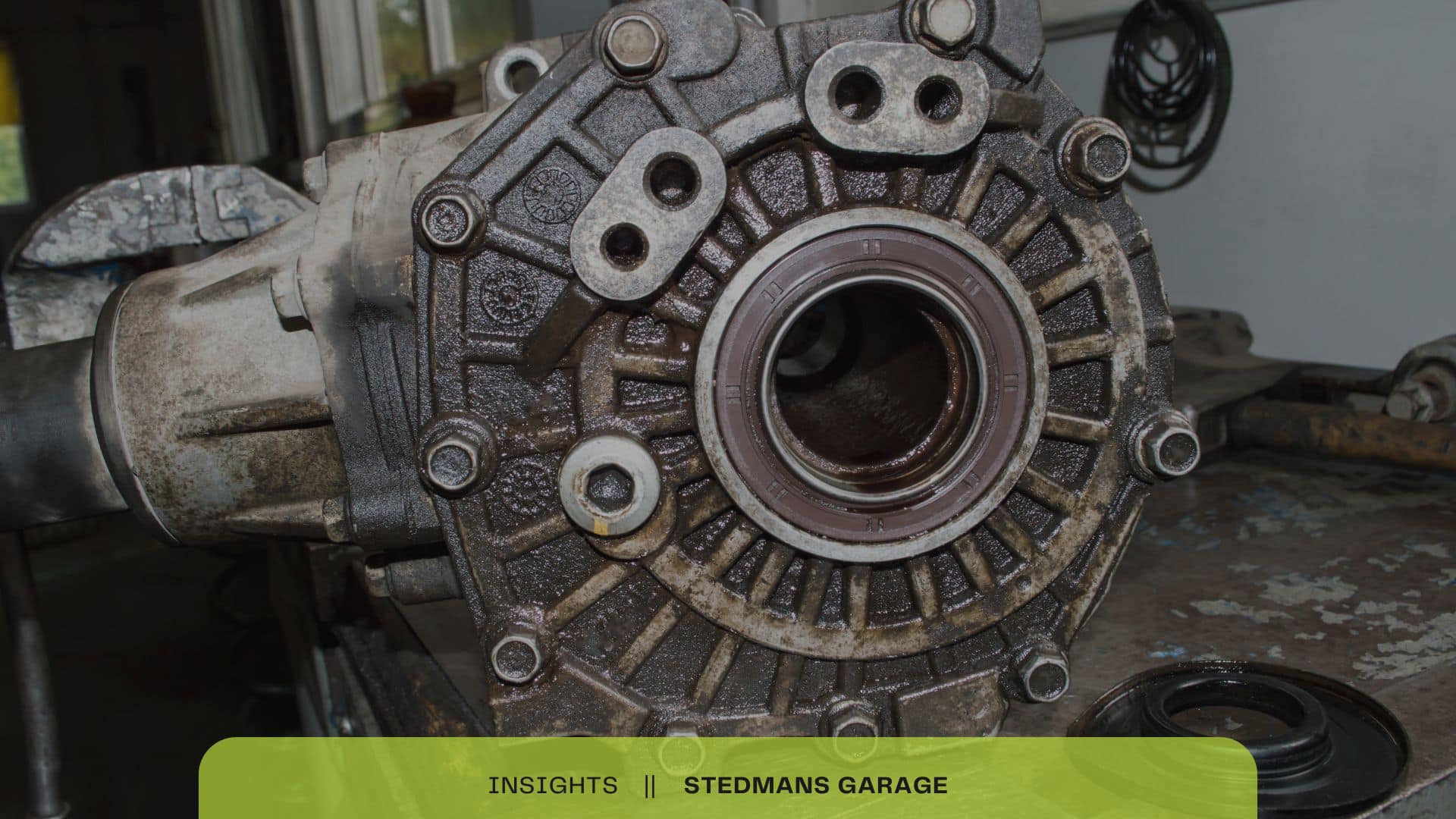
The transfer case is a core part of Land Rover’s four-wheel-drive system. It is a mechanical device that takes power from the transmission and splits it between the front and rear axles. This allows all four wheels to receive engine power, which is essential for moving across difficult surfaces. The transfer case is found in both classic and modern Land Rover models. Its job is to manage how much torque goes to each axle, ensuring stable drive and traction whether you are on or off the road.
Splitting Torque Between Axles
When conditions demand, the transfer case can adjust how torque is divided between the front and rear differentials. In standard driving conditions, power may be split evenly, but on slippery or rough terrain, the transfer case can send more torque to the axle with better grip. This dynamic distribution helps maintain control and prevents wheels from spinning uselessly when traction is lost.
Low-Range Gear Capabilities
A standout feature of many Land Rover transfer cases is the inclusion of low-range gearing. Low-range mode is activated using an electronic switch or manual lever and engages a lower gear ratio. This slows the vehicle but increases torque, helping drivers tackle steep hills, mud, rocks, or any demanding surface at low speed and with more control. While low range is standard in several models, it is an optional extra in others, like the Discovery 5.
Combined, these features make the transfer case a vital link in Land Rover’s ability to navigate challenging terrain. This integration works closely with modern electronic systems to maximise traction and stability.
Land Rover’s Terrain Response System
Integration with Differentials and Drivetrain
Land Rover’s Terrain Response system is a unique feature designed to make the most of the vehicle’s advanced drivetrain. It uses electronic controls to adjust the behaviour of differentials, throttle response, and gear selection automatically. The system works in real-time, communicating with the differentials and transfer case. This ensures power is distributed efficiently between the wheels for optimal traction, whether driving on mud, sand, gravel, or snow.
Terrain Modes and Their Impact
The system offers several selectable terrain modes. Drivers can choose modes like Grass/Gravel/Snow, Mud and Ruts, Sand, or Rock Crawl, depending on the ground they face. Each mode tweaks how the differential responds. For example, in Rock Crawl mode, the differentials may lock more quickly, ensuring maximum grip on uneven rocks. Sand mode enables smoother power delivery, preventing the wheels from digging in too much. These adjustments help keep the vehicle stable, safe, and moving forward even in extreme off-road conditions.
Advanced Electronic Enhancements for Traction
Terrain Response also benefits from advanced electronics such as sensors detecting wheel slip and gradient angles. The system reacts to changes by adjusting differential locks, throttle, and brakes with precision. This electronic support means drivers face fewer manual adjustments when tackling tough environments.
This foundation of electronic control and differential management underpins the reliability and effectiveness of Land Rover’s off-road performance.
Common Drivetrain Issues and Maintenance

Typical Problems Affecting Differentials and Drivetrains
Land Rover vehicles, while engineered for tough terrain, do present some common drivetrain and differential issues. Owners may encounter delayed or rough shifting, which can feel like hesitation or a jolt between gears. This often stems from wear in transmission components or faulty solenoids. Other frequent complaints include abnormal noises (whining, humming, gear grinding, or clunking) especially when accelerating, turning, or shifting direction. Vibrations in the floor or steering, poor handling when cornering, premature tyre wear, and leaks under the axles can also signal drivetrain problems.
Electrical faults, air suspension failures, and transmission overheating have also been reported. Major issues can appear after 37,000 miles, with more significant repairs often necessary as mileage increases.
Preventative Maintenance Practices
Routine preventative maintenance is essential for a long-lasting Land Rover drivetrain. Recommended practices include:
- Regular oil and fluid changes
- Tyre rotation and pressure checks
- Brake inspections
- Scheduled engine diagnostics
- Monitoring for leaks and unusual noises
- Adhering to manufacturer maintenance schedules
Driving sensibly and avoiding persistent heavy loads or harsh terrain, when possible, further extends component lifespan.
Signs of Potential Differential Problems
Drivers should act promptly if they notice:
- Whining, howling, or clunking noises from under the vehicle
- Vibrations or shuddering, especially when accelerating
- Difficulty handling when turning
- Uneven or excessive tyre wear
- Visible oil leaks near differential housings
Catching these signs early and seeking professional help can help avoid further damage and costly repairs.
At Stedmans Garage, we offer specialist Land Rover diagnostics in Worthing, using dealer-level tools to accurately identify and resolve drivetrain and mechanical faults across all models.
Keeping your Land Rover’s drivetrain in top condition is key to maintaining its off-road capabilities and reliability.
Modern Innovations in Land Rover Drivetrains
Recent Technological Advancements
Land Rover continues to push the boundaries of 4×4 technology by integrating advanced electronic systems with time-tested mechanical components. Modern drivetrains now feature sophisticated traction aids, which rely on real-time information and sensors to automatically adjust torque distribution. This results in improved grip and stability on diverse terrains, even before any wheel slip is noticeable. The shift towards electronic control units has also enhanced the precision of drivetrain responses, allowing for quicker and smoother adjustments compared to purely mechanical systems.
Hybrid Technology Integration
Recent Land Rover models have begun to incorporate hybrid technologies alongside traditional drivetrain elements. These systems use electric motors to supplement engine power, offering additional torque when needed and improving efficiency in demanding conditions. The blend of electric and combustion power provides seamless transitions between on-road and off-road driving, making the vehicles more versatile and environmentally conscious without compromising performance.
4X4i Information System
Another innovation is the 4X4i information system, designed to give drivers a clear view of their vehicle’s status in real time. This system displays vital information such as differential lock status, wheel articulation, and vehicle pitch or roll angles. By providing this immediate feedback, drivers can make informed decisions and stay aware of their vehicle’s capabilities, helping them to tackle technical off-road sections confidently.
Modern advancements in Land Rover drivetrains reflect a balance between innovative electronics and robust mechanical design, ensuring the brand remains a leader in all-terrain capability while adapting to emerging automotive technologies.
Conclusion: The Future of Land Rover Drivetrains
Overview and Reflection
Land Rover’s 4×4 systems and differentials have long been recognised for their dependability and performance in demanding conditions. By using robust drivetrain technology, Land Rover builds vehicles capable of tackling rough terrain without sacrificing on-road comfort. The combination of permanent All-Wheel Drive, specialised differential configurations, and advanced transfer cases forms the backbone of their approach to off-road exploration.
Emerging Trends
In recent years, Land Rover has committed to integrating new technologies with its proven mechanical systems. Innovations such as hybrid drivetrains allow for reduced emissions while maintaining the ability to distribute power to all wheels as conditions require. Electronic aids, including smart traction and real-time feedback, are increasingly important in helping drivers make the most of challenging landscapes. Hybrid integration signals a future where efficiency and capability work hand in hand.
Importance for Owners and Enthusiasts
Understanding the fundamentals of differentials, transfer cases, and electronic systems is essential for anyone operating or maintaining a Land Rover. This knowledge empowers drivers to use their vehicles to their full potential while recognising the need for routine checks and simple care. As technology evolves, those who keep up to date will better appreciate the capabilities beneath the surface.
Land Rover’s focus on dependable mechanics paired with forward-looking electronics continues to set a benchmark in off-road mobility.